
Diane Keaton never bought a house in the Hamptons. That fact alone should disqualify her from these pages. It doesn’t. Because Keaton did something more consequential than purchasing East End real estate. She defined what East End real estate was supposed to look like, how it was supposed to feel, and what kind of woman was supposed to live inside it. Her Diane Keaton net worth at the time of her death in October 2025 stood at $100 million. The cultural valuation runs considerably higher.
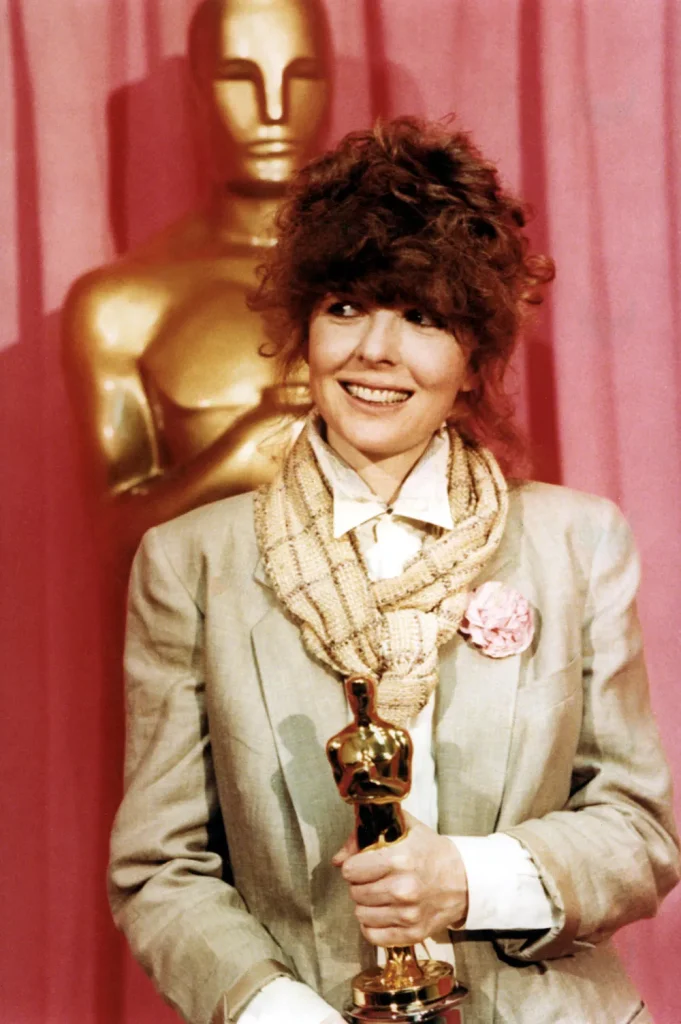
Additionally, the actress who passed away at 79 from pneumonia left behind a legacy that functions on two separate tracks simultaneously. There’s the acting career — six decades, an Oscar, two Golden Globes, a BAFTA, and performances that defined how American cinema portrays women over 40. Then there’s the second career, the one most people didn’t know about until they were already living inside its influence. Diane Keaton was one of the most successful luxury real estate flippers in Los Angeles history. She bought broken-down mansions, restored them with obsessive precision, and sold them for millions in profit. She made more money choosing tile than memorizing dialogue.
The Before: A Girl From Orange County Who Changed Her Name
Diana Hall was born January 5, 1946, in Los Angeles to a homemaker mother and a civil engineer father. The family lived in suburban Orange County — comfortable, middle-class, unremarkable. Nothing about young Diana’s childhood suggested the trajectory that followed. She was the oldest of four children in a household that valued normalcy over ambition. The wound, to the extent there was one, was invisibility. Not trauma. Not poverty. Just the quiet erosion of being a smart, observant girl in a culture that didn’t reward observation in women.
She studied acting at the Neighborhood Playhouse in New York, learning the Meisner Technique under teachers who demanded emotional honesty rather than performance. When she tried to register with Actors’ Equity, another Diana Hall already existed. So Diana Hall became Diane Keaton, borrowing her mother’s maiden name. The reinvention was administrative. The instinct behind it — the willingness to become someone new in order to become more fully yourself — was foundational. Everything that followed grew from that single pivot.
The Pivot Moment: Woody Allen Saw What Nobody Else Could
In 1968, Keaton joined the original Broadway cast of Hair. She became briefly notorious for refusing to appear nude at the end of the first act. In an era that treated female exposure as liberation, Keaton’s refusal read as prudish. It was actually something more interesting. It was an early exercise in setting terms — performing on her own conditions rather than the conditions the moment demanded. That instinct would define her entire career.
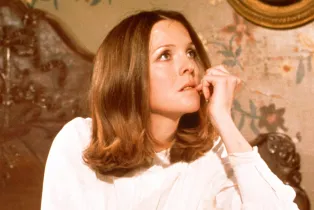
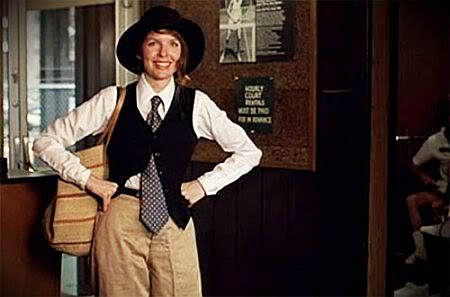
Woody Allen cast her in Play It Again, Sam on Broadway in 1969, and their creative partnership became the most productive actor-director collaboration of the 1970s. They dated briefly, remained close for decades, and made eight films together. However, it was their 1977 collaboration that altered the trajectory of American cinema. Annie Hall won four Academy Awards, including Best Actress for Keaton. More significantly, the character of Annie Hall — neurotic, funny, self-deprecating, dressed in men’s vests and oversized ties — created a template for female characters that Hollywood hadn’t seen before. Annie wasn’t the love interest. She was the subject.
Consequently, the Annie Hall wardrobe triggered a nationwide fashion movement. Women started wearing men’s clothing not as rebellion but as self-expression. Vogue credited Keaton with inventing a style category that persists nearly fifty years later. The Diane Keaton net worth story begins here — not with a paycheck, but with the discovery that authenticity could be monetized at scale.
The Climb: From Kay Corleone to the Most Bankable Woman Over 50
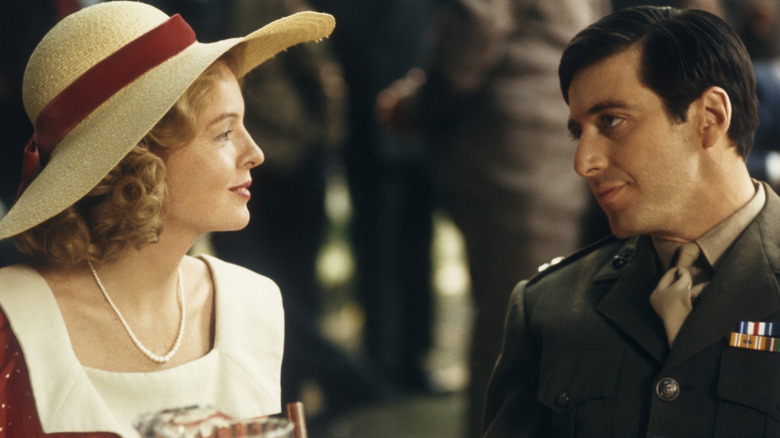
Between Annie Hall and Something’s Gotta Give, Keaton navigated a career arc that would have destroyed lesser actors. She played Kay Adams-Corleone across three Godfather films, providing the moral conscience of a franchise built on moral collapse. A Best Actress nomination followed for Warren Beatty’s Reds in 1981. Along the way, she directed music videos for Belinda Carlisle, made comedies and dramas and a few outright disasters — all with equal commitment.
The 1990s brought commercial resurrection. Father of the Bride alongside Steve Martin grossed $189 million worldwide and proved Keaton could anchor mainstream comedy. The First Wives Club with Goldie Hawn and Bette Midler became a cultural phenomenon — three women over 45 headlining a hit comedy felt revolutionary in 1996. Meanwhile, Keaton earned another Oscar nomination for Marvin’s Room, sharing the screen with a young Leonardo DiCaprio who later called her a legend.
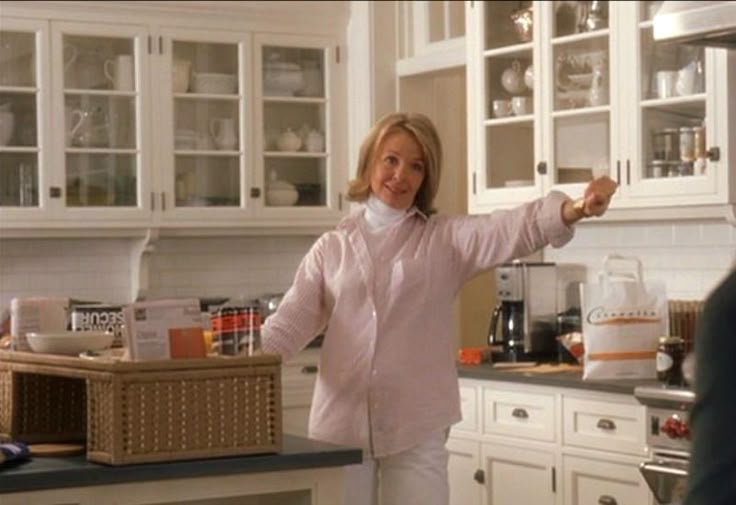
By the time Nancy Meyers cast her in Something’s Gotta Give in 2003, Keaton was 57 years old. Hollywood’s actuarial tables said she was finished as a romantic lead. The film grossed $266 million and proved the actuarial tables were written by people who didn’t understand their own audience. Keaton’s performance as Erica Barry — a successful playwright pursued by both Jack Nicholson and Keanu Reeves — became the foundational text for an entire Hamptons cultural identity. Women didn’t just watch the movie. They renovated their kitchens because of it.
The Hamptons Chapter: She Never Lived There but She Built the Fantasy
Here’s the paradox that makes the Diane Keaton net worth story genuinely fascinating. Keaton never owned Hamptons real estate. She was a Los Angeles person — born there, lived there, died there. Her real estate empire existed entirely in Southern California. She bought a Bel Air mansion, renovated it with meticulous attention to period detail, and sold it for $16.5 million. She acquired a Laguna Beach property for $7.5 million and flipped it for $12.75 million. Her primary residence in Brentwood, purchased for $4.7 million, was listed at $28.9 million before her death.
Yet no single person — not a developer, not an architect, not a real estate agent — influenced Hamptons interior design more profoundly than Diane Keaton did through the movies she starred in and the homes she restored. The Erica Barry beach house in Something’s Gotta Give was a set built on a Paramount soundstage. It became the most referenced residential design template on the East End. Every white kitchen from Westhampton to Montauk carries her fingerprint. Every open floor plan with ocean light and stone floors is a descendant of a fictional house inhabited by a fictional character played by a woman who lived 3,000 miles away.
Furthermore, Keaton’s real estate philosophy — buying architecturally significant properties, restoring them with historical integrity, and selling them to buyers who understood what they were purchasing — mirrors the exact value proposition of Hamptons real estate at its highest end. She treated houses the way she treated characters: with respect for their original structure and a willingness to reveal what was already beautiful rather than impose something new.
What She Built: $100 Million and Two Kids on Her Own Terms
The Diane Keaton net worth figure — $100 million — tells a particular kind of story. It’s large enough to signal extraordinary success. It’s modest enough, by Hollywood standards, to suggest someone who prioritized craft over commerce. Keaton earned substantial salaries for her biggest films, but she never chased franchises, never attached herself to blockbuster IP, never traded authenticity for scale. According to industry reports, she charged between $150,000 and $299,000 for speaking engagements. Her real estate profits likely exceeded her total acting income.
Notably, Keaton adopted two children as a single mother — daughter Dexter in 1996 at age 50, and son Duke in 2001 at age 55. She never married. Not Al Pacino, with whom she had a decade-long on-and-off romance. Not Warren Beatty, who she dated during the filming of Reds. And certainly not Woody Allen, who cast her in eight films. Each of these men represented a conventional path to partnership that Keaton simply declined to take. After her death, Pacino released a statement saying Keaton had influenced the direction of his life and that in his heart, she could fly.
Her opposition to plastic surgery was characteristically direct. She told Harper’s Bazaar she felt compelled to be authentic, that her face needed to reflect how she actually felt. In a culture — and particularly in the Hamptons summer social scene — where cosmetic intervention is as routine as a blowout, that position was radical. It was also, like most things Keaton did, ahead of the curve. The current movement toward aging naturally owes more to Diane Keaton than to any wellness influencer with a skincare line.
The Soft Landing: A Legacy That Teaches the Hamptons About Itself
Diane Keaton died on October 11, 2025, at Saint John’s Health Center in Santa Monica. Pneumonia took her at 79. Her will reportedly left $5 million to her dog Reggie — a final act of unapologetic individuality that surprised exactly nobody who understood her.
Nancy Meyers wrote that the world had lost a giant — a brilliant actress who repeatedly exposed herself emotionally to tell other people’s stories. Al Pacino, Robert De Niro, Leonardo DiCaprio, Bette Midler, Goldie Hawn, Jane Fonda, Steve Martin, and Reese Witherspoon all released tributes. Witherspoon became emotional recalling how Keaton had mentored her. Paramount’s statement noted that Keaton became a cinematic icon by doing the most daring thing of all: being wholly herself.
Given that the Hamptons social scene runs on performance — the right outfit, the right party, the right house, the right person on your arm — Keaton’s legacy operates as a quiet corrective. She demonstrated that authenticity compounds more reliably than pretension. A $100 million fortune followed from trusting her own taste rather than following market consensus. Turtlenecks when everyone else showed skin. Children adopted alone when the culture expected partnership. Old houses restored when the market wanted new construction.
For every woman sitting on her Hamptons deck in a white kitchen, watching the ocean and wondering whether the best part of her life is behind her, Diane Keaton’s career provides the answer. It isn’t. The best part is the part where you stop performing for everyone else’s benefit and start building something that reflects who you actually are. Keaton did that for six decades. The Diane Keaton net worth is $100 million. The Diane Keaton lesson is worth considerably more.
Related Reading
- Why Every Woman East of Shinnecock Still Lives Inside Something’s Gotta Give
- Hamptons Real Estate: The Complete Insider’s Guide to Buying, Selling, and Living East
There’s a moment in every great movie where a character finally sees what was always in front of them. That’s what Social Life Magazine does for the Hamptons — it holds up a mirror to a world most people only glimpse from the outside, and it lets you see yourself in the frame.
Want to be featured in Social Life Magazine? Whether you’re a brand, a tastemaker, or a story waiting to be told, our editorial team crafts narratives that position you exactly where you belong. Reach out to our editorial team today.
Ready for guaranteed placement? Our Paid Feature program puts your story in front of 25,000 affluent readers per issue — with full creative control and premium positioning. Submit a Paid Feature today.
Join 82,000+ readers who get the Hamptons delivered. Our email list is the inside track for events, features, and access you won’t find anywhere else. Subscribe to our email list.
Experience the event of the summer. Polo Hamptons brings together the East End’s most influential crowd for world-class polo, luxury brand activations, and the kind of networking that actually moves the needle. Get your tickets and sponsorship info at PoloHamptons.com.
Want Social Life in your hands? Our print issues are collector’s items — 25,000 copies distributed from Westhampton to Montauk every summer, plus fall and winter editions to Upper East Side doorman buildings. Subscribe to the print edition.
Love what we do? Keep it going. Social Life Magazine has been the Hamptons’ cultural record for 23 years. Your support helps us keep telling the stories that matter. Donate $5 to support Social Life Magazine.
Author

Written by
Recent Posts
Amanda Peet Net Worth: The Brilliant Dinner Guest Hollywood Forgot to Invite Back
Keanu Reeves Net Worth: Infinite Losses, and the Role That Proved Kindness Compounds
Jack Nicholson Net Worth: Three Oscars, and the Role He Couldn’t Stop Playing
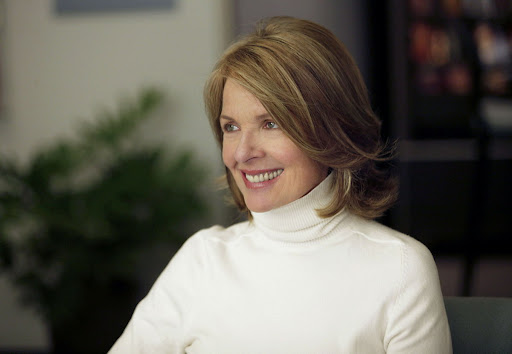
Diane Keaton Net Worth: The Fortune Built on Talent, Turtlenecks, and the Homes She Left Behind
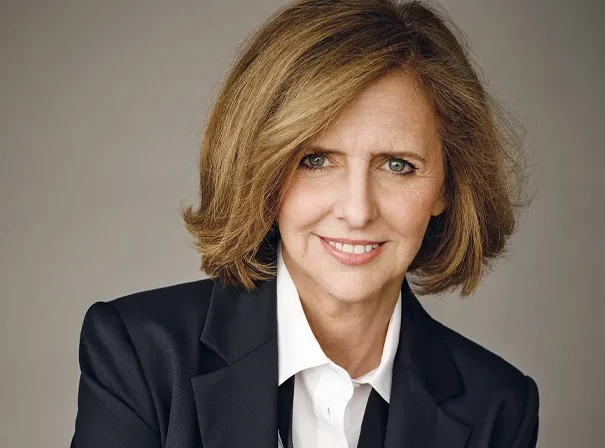
Nancy Meyers Net Worth: A Filmography, an Inheritance, and the Kitchen That Sold the Hamptons
Categories
- Art
- Articles
- Beauty & Skincare
- Celebrities
- Celebrities|The Chronicles
- Chronicles
- Entertainment|Culture
- Event Photos
- Events
- Fashion
- Fashion & Style
- Featured
- Food & Beverage
- Food, Spirits, Wine
- Hamptons
- Hamptons Celebrities
- Hamptons Celebrities|Celebrities|The Chronicles
- Health
- Health & Beauty
- Lifestyle
- Luxury Lifestyle
- Movies|Hamptons Lifestyle
- Press
- Profiles
- Real Estate
- Technology
- The Chronicles
- Travel
- Uncategorized
- Weddings