
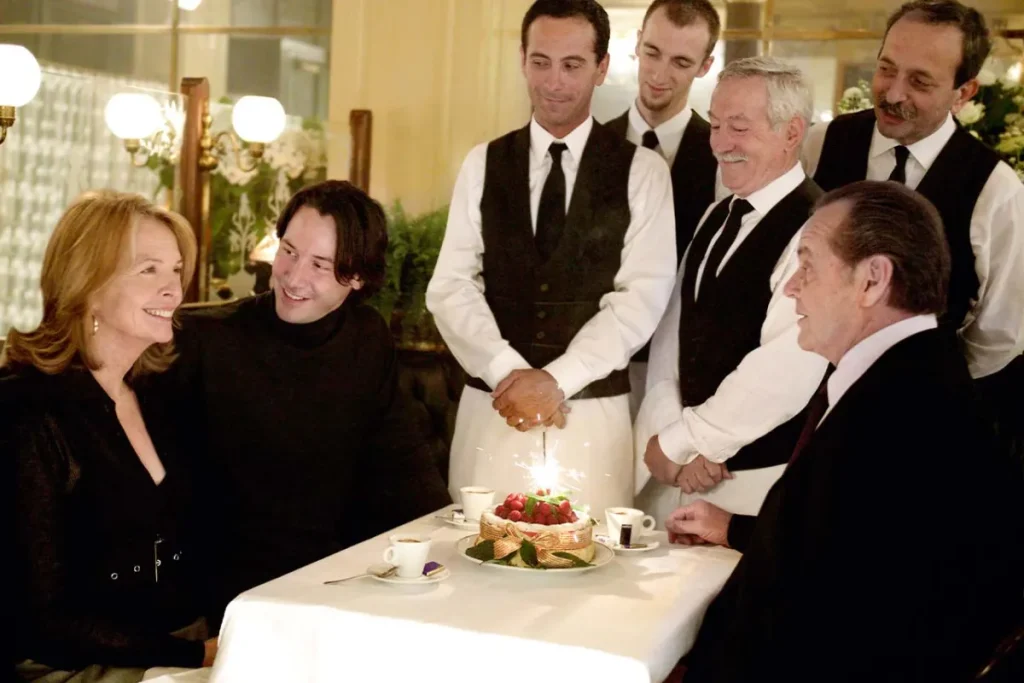
Twenty-three years after release, Something’s Gotta Give still controls more renovation budgets in the Hamptons than any architect working today. Nancy Meyers didn’t just direct a romantic comedy in 2003. She engineered a lifestyle conversion event that moved real estate markets, rewired how women over 45 think about romance, and turned a fictional Sagaponack beach house into the most influential interior design blueprint of the 21st century. The movie grossed $266 million worldwide. The cultural ROI is incalculable.
Furthermore, the film accomplished something no Hamptons marketing campaign has managed before or since. It made the East End aspirational not for its parties or its celebrity sightings, but for its quiet promise: that a brilliant woman could build a beautiful life alone and still find love walking through her own front door. That premise didn’t just sell tickets. It sold a belief system. And belief systems don’t expire.
Nancy Meyers Built a Religion Out of White Kitchens

THE WINNER
Before Something’s Gotta Give, Nancy Meyers was a successful director. Afterward, she became a genre. The distinction matters. Directors make movies. Genres reshape how people live. Meyers understood something that eluded every other filmmaker working in the romantic comedy space: women fantasize about environments as intensely as they fantasize about romance. Sometimes more.
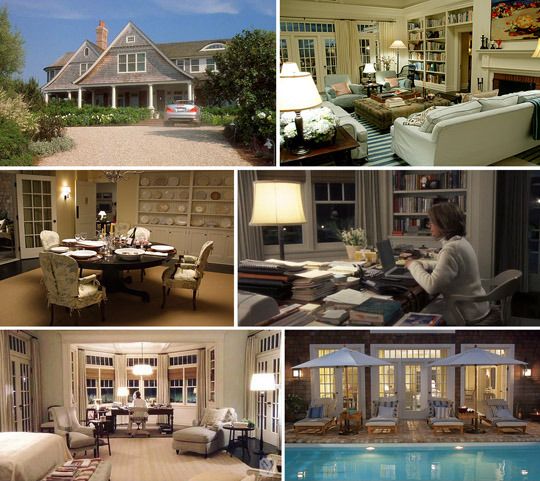
Notably, the Erica Barry beach house wasn’t just a set. It was an argument. Every room communicated a thesis about what a woman’s life could look like after divorce, after heartbreak, after the culture tells her she’s finished. Stone floors said permanence. Ocean light said freedom. That kitchen — white cabinets, professional range, marble countertops, hydrangeas in clear vases — said: I built this myself and it’s extraordinary.
Consequently, Restoration Hardware, Pottery Barn, and an entire coastal-grandmother aesthetic owe their existence to decisions Meyers made in pre-production. Architectural Digest has profiled her sets multiple times, treating them as legitimate design landmarks. Interior designers across the East End report clients still referencing “the Nancy Meyers look” as shorthand for aspirational beach living. She didn’t just design a movie. She designed a market segment. Read the full Nancy Meyers origin story.
Diane Keaton Proved the Entire Industry Wrong in a Turtleneck

THE WINNER
Hollywood had a rule in 2003. Women over 50 played mothers, judges, or disappeared. Diane Keaton, at 57, played a romantic lead pursued by two desirable men, and she did it while covering her arms. That turtleneck wasn’t a costume choice. It was a declaration of war against every casting director who’d written off women her age as romantically inert.
The crying montage alone earned its place in cinema history. Erica Barry cycling through heartbreak — sobbing into her laptop, weeping while eating, crying in her car — wasn’t played for comedy. It was played for recognition. Every woman who’d been gutted by a man she’d finally let past her defenses felt that sequence physically. Keaton didn’t perform grief. She channeled the specific devastation of loving someone after you’d decided you were done with all that.
Meanwhile, her Hamptons lifestyle in the film became aspirational precisely because it wasn’t performative. Erica didn’t throw parties. She didn’t need validation. She wrote plays, cooked for herself, and lived in a house that reflected her taste rather than her tax bracket. That quiet confidence read as revolutionary in a genre built on female desperation. Women in the Hamptons didn’t just watch Erica Barry. They apprenticed under her. Diane Keaton’s $100 million fortune tells the rest of that story.
Jack Nicholson’s Last Great Role Was Playing His Own Reckoning
THE PIVOT
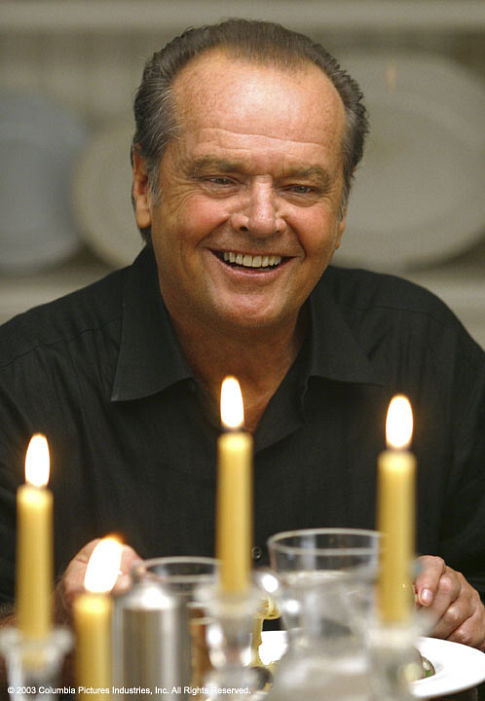
Harry Sanborn works because Jack Nicholson wasn’t acting. He was confessing. The legendary actor spent decades cultivating a reputation as Hollywood’s most charming commitment-phobe, and then he stepped into a role that dissected exactly that archetype with surgical honesty. Every man over 55 at a Polo Hamptons event who dates women half his age has a little Harry Sanborn operating inside him. The movie doesn’t judge Harry. It just shows him what he’s trading away.
The genius of Nicholson’s performance lives in the small moments. Harry’s face when he realizes Erica is genuinely brilliant. The panic when physical intimacy leads to emotional intimacy. The retreat to younger women not as preference but as cowardice. According to Vanity Fair, Nicholson considered this among his most personal performances. Given his public biography, that admission carries weight.
Additionally, this was functionally Nicholson’s final major romantic role before his retirement from acting. That gives every rewatch an additional layer of melancholy. Harry Sanborn choosing vulnerability wasn’t just a character arc. It was a farewell from an actor who’d spent a career avoiding exactly that kind of exposure on screen. The line between performer and performance dissolved completely, and the Hamptons audience — fluent in the language of carefully maintained personas — recognized it immediately. The full Jack Nicholson net worth story reveals exactly what that exposure cost him.
Keanu Reeves Played the Role Nobody Expected Him to Nail

THE DARK HORSE
Julian Mercer could have been a punchline. A young, handsome doctor falls for a woman decades older, and the audience is supposed to buy it without irony? In 2003, that was a radical ask. Keanu Reeves made it effortless. He played Julian with zero condescension, zero fetishization, and zero hesitation. Julian doesn’t find Erica attractive despite her age. He finds her attractive, full stop. The qualifier never enters the equation.
Ultimately, Julian Mercer serves a critical structural purpose in the film’s argument. He proves Erica’s desirability isn’t Harry’s gift to bestow. Before Harry arrives, a brilliant younger man already sees what Harry is too afraid to recognize. Julian is the movie’s control variable — he demonstrates that Erica’s worth was never in question. Only Harry’s ability to perceive it was.
Reeves brought an earnestness to the role that contemporary audiences now associate with his entire public persona. Given his subsequent cultural canonization as the internet’s most beloved human, Julian Mercer reads differently in retrospect. He wasn’t playing against type. He was playing his actual type before the culture caught up. Keanu Reeves built a $380 million fortune on exactly that principle. For the Hamptons celebrity audience, Keanu in this role is proof that genuine kindness reads as more attractive than practiced charm.
Amanda Peet Deserved Better Than Hollywood Gave Her

THE GHOST
Marin Barry is the thankless role that Amanda Peet made memorable anyway. The young girlfriend, the catalyst, the woman who exists in the plot primarily to bring Harry and Erica into proximity. In lesser hands, Marin becomes a caricature — the bimbo, the trophy, the punchline. Peet refused to play it that way, and Meyers was smart enough to write it that way too.
Marin is genuinely warm, perceptive, and self-aware. She likes Harry without illusions. She loves her mother without resentment. When she realizes what’s happening between Harry and Erica, she steps aside with grace rather than drama. By contrast, the typical rom-com would have made her a villain. This film made her a person. That restraint is one of the movie’s most quietly progressive choices.
However, Peet’s career trajectory after the film illustrates Hollywood’s disposability problem. She delivered strong performances throughout the 2000s but never achieved the leading-role status her talent warranted. The Harvard Business Review has documented the narrow window Hollywood offers women between ingenue and character actor. Peet fell into that gap. In Hamptons terms, she’s the brilliant dinner guest everyone remembers fondly but nobody thought to invite back. The industry’s loss. Amanda Peet’s career trajectory illustrates the problem precisely.
The Sagaponack House Became Worth More Than the Movie
THE CAUTIONARY TALE
The real star of Something’s Gotta Give doesn’t have a SAG card. It has a foundation, a wraparound porch, and a property tax bill that would make your eyes water. The Erica Barry house — a set built on a Paramount soundstage but designed to evoke Sagaponack perfection — became the single most influential residential design template in the Hamptons since the Maidstone Club established the architectural tone a century earlier.
Price is the cautionary element. The aesthetic Meyers popularized drove renovation spending across the East End to levels that permanently altered the market. White kitchens, open floor plans, seamless indoor-outdoor living, stone-and-wood material palettes — these became baseline expectations rather than luxury upgrades. A Hamptons real estate listing without a Meyers-adjacent kitchen now reads as incomplete. The aspiration that the film created became an obligation that priced out an entire tier of buyers.
Consequently, the Something’s Gotta Give house is both fantasy and trap. It represents the dream of building a life so beautiful it attracts love through sheer aesthetic gravity. It also represents a market reality where that dream now costs $15-25 million in the zip codes the film romanticized. The Hamptons sold a version of itself through this movie. Buyers showed up. The prices followed. Now the Erica Barry house isn’t just aspirational. It’s exclusionary. That tension — between the democratic promise of the fantasy and the plutocratic reality of the market — is the most Hamptons story imaginable.
The Film That Refuses to Age Out
Something’s Gotta Give endures in the Hamptons because it flatters the audience without lying to them. Every woman watching knows she’s Erica. Every man suspects he might be Harry. The film treats both recognitions with respect. It doesn’t moralize about age-gap dating. No lectures about female empowerment. It simply shows the math: choosing surface over substance costs you the best person in the room.
The McKinsey Global Institute has documented shifting demographics in luxury markets, with women over 45 controlling more discretionary wealth than any previous generation. Meyers saw that audience before the data confirmed it. She made a $80 million bet that women with money, taste, and emotional intelligence would pay to see themselves reflected on screen. The bet returned $266 million and counting.
Given that the cultural conversation around age, romance, and reinvention has only intensified — from the Leonardo DiCaprio discourse to the coastal grandmother trend to the Nancy Meyers cinematic universe that now includes The Holiday, It’s Complicated, and The Intern — the original text remains essential. You cannot understand the aesthetic, emotional, or aspirational DNA of Hamptons culture without understanding this film. It isn’t a movie anymore. It’s the operating system.
Related Reading
- TV Shows With the Largest Cult Following Among Hamptons Insiders
- Hamptons Real Estate: The Complete Insider’s Guide to Buying, Selling, and Living East
There’s a moment in every great movie where a character finally sees what was always in front of them. That’s what Social Life Magazine does for the Hamptons — it holds up a mirror to a world most people only glimpse from the outside, and it lets you see yourself in the frame.
Want to be featured in Social Life Magazine? Whether you’re a brand, a tastemaker, or a story waiting to be told, our editorial team crafts narratives that position you exactly where you belong. Reach out to our editorial team today.
Ready for guaranteed placement? Our Paid Feature program puts your story in front of 25,000 affluent readers per issue — with full creative control and premium positioning. Submit a Paid Feature today.
Join 82,000+ readers who get the Hamptons delivered. Our email list is the inside track for events, features, and access you won’t find anywhere else. Subscribe to our email list.
Experience the event of the summer. Polo Hamptons brings together the East End’s most influential crowd for world-class polo, luxury brand activations, and the kind of networking that actually moves the needle. Get your tickets and sponsorship info at PoloHamptons.com.
Want Social Life in your hands? Our print issues are collector’s items — 25,000 copies distributed from Westhampton to Montauk every summer, plus fall and winter editions to Upper East Side doorman buildings. Subscribe to the print edition.
Love what we do? Keep it going. Social Life Magazine has been the Hamptons’ cultural record for 23 years. Your support helps us keep telling the stories that matter. Donate $5 to support Social Life Magazine.
Author

Written by
Recent Posts

Amanda Peet Net Worth: The Brilliant Dinner Guest Hollywood Forgot to Invite Back
Keanu Reeves Net Worth: Infinite Losses, and the Role That Proved Kindness Compounds
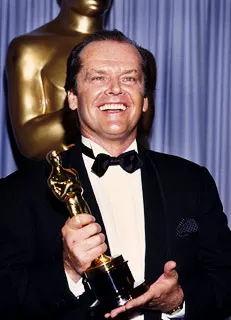
Jack Nicholson Net Worth: Three Oscars, and the Role He Couldn’t Stop Playing
Diane Keaton Net Worth: The Fortune Built on Talent, Turtlenecks, and the Homes She Left Behind
Nancy Meyers Net Worth: A Filmography, an Inheritance, and the Kitchen That Sold the Hamptons
Categories
- Art
- Articles
- Beauty & Skincare
- Celebrities
- Celebrities|The Chronicles
- Chronicles
- Entertainment|Culture
- Event Photos
- Events
- Fashion
- Fashion & Style
- Featured
- Food & Beverage
- Food, Spirits, Wine
- Hamptons
- Hamptons Celebrities
- Hamptons Celebrities|Celebrities|The Chronicles
- Health
- Health & Beauty
- Lifestyle
- Luxury Lifestyle
- Movies|Hamptons Lifestyle
- Press
- Profiles
- Real Estate
- Technology
- The Chronicles
- Travel
- Uncategorized
- Weddings