
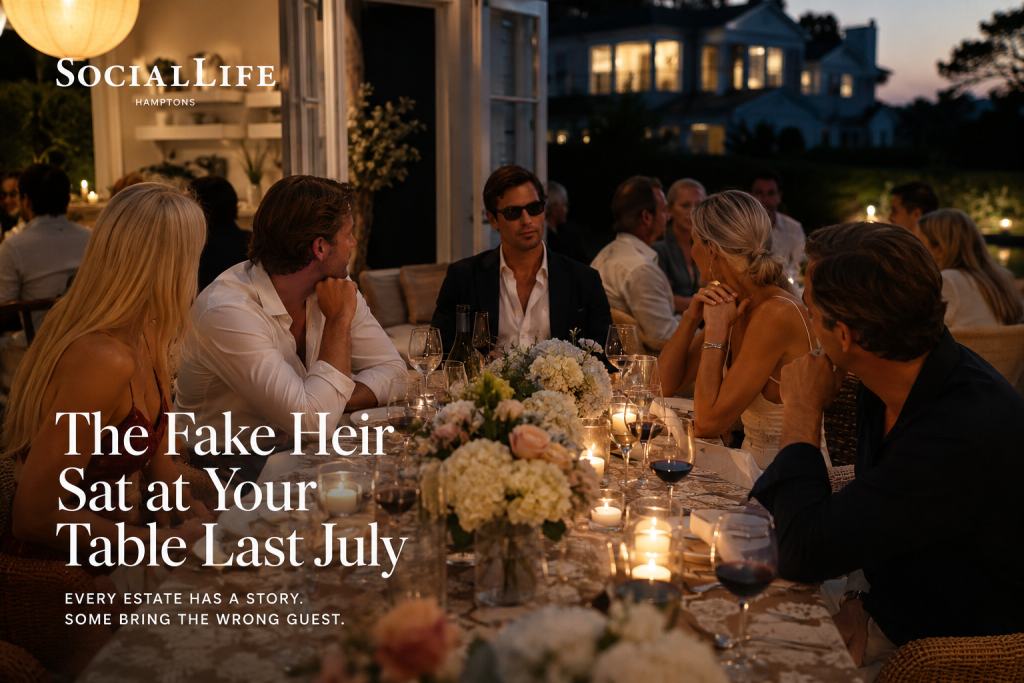
Some August night this summer, at a party in Water Mill, someone will be introduced as an heir to something, and nobody will check. The Hamptons runs on introductions, and introductions run on trust. That gap is where the Hamptons con artists have always lived. The roster is longer and better dressed than anyone likes to admit.
This is the field guide. The borrowed names, the fake trusts, the Ponzi money that bought oceanfront, and the verification culture that eventually catches almost everyone. Consider it a diagnostic: every con that worked out here worked because it understood the status machine better than the members did. One note on scope. The characters below worked Manhattan, Greenwich, and Montauk at different altitudes of ambition, but the mechanism never changes with the zip code. A con is a status machine running in reverse: instead of converting money into belonging over years, it converts the appearance of belonging into money, fast.
Why Con Artists Summer Here
The East End is target-rich by design. Wealth concentrates, guards drop, and the season itself resets the room every Memorial Day, so new faces are expected rather than suspicious. A stranger in February is a question. A stranger in July is a Saturday.
The props are also cheap relative to the payoff. A blazer, a borrowed convertible, and a working knowledge of which lane outranks which will carry a confident person through a month of parties. Meanwhile, the potential returns run to investment checks, house invitations, and introductions that compound like interest.
Above all, the culture of discretion protects them. Asking direct questions about money is the one taboo the Hamptons actually enforces, which means the most useful verification questions are also the rudest. Hamptons con artists thrive inside that etiquette. Good manners, it turns out, are a security vulnerability.
The Ponzi on the Ocean
Start with the biggest name. Bernard Madoff kept a beach house on Old Montauk Highway, and until December 2008 it read as just another quietly excellent property owned by a quietly excellent man. The fraud beneath it ran to tens of billions, the largest Ponzi scheme ever prosecuted.
The Montauk house became the con’s most legible artifact. After the collapse, federal marshals seized and sold it for north of $9 million, and the proceeds went toward victims who had trusted a handshake made at clubs and charity dinners. Notably, plenty of that trust was built in rooms exactly like the ones this magazine covers.
The lesson isn’t that Madoff hid well. It’s that the setting vouched for him. An oceanfront address performed the due diligence in his investors’ heads, because the East End’s whole visual language says vetted. That assumption, more than any forged statement, was the instrument of the crime.
The Borrowed Name Playbook
Then there is the oldest trick in the American status manual: take a name that arrives pre-verified. Christian Gerhartsreiter, a German student who overstayed a visa, cycled through aliases for a decade before settling on the one that opened every door: Clark Rockefeller. The surname did the work his biography couldn’t.
As Rockefeller, he married a Harvard MBA earning millions a year, showed off a collection of modernist paintings that later proved fake, and held court in clubs from Connecticut to Manhattan. The marriage lasted over a decade. Eventually a custody dispute, a kidnapping, and a murder conviction ended the longest con most prosecutors had ever seen.
He had company in the genre. In 1983, David Hampton talked his way into Manhattan’s best addresses by presenting himself as Sidney Poitier’s son, a con so elegant it became the play Six Degrees of Separation. Both men proved the same theorem: society doesn’t verify names. Names verify people.
The Heiress Gambit
The modern update ran on Instagram. Anna Sorokin, a Russian-born fabulist calling herself a German heiress, invented a $60 million trust and let Manhattan’s hospitality economy extend her the rest. Hotels, banks, and friends covered more than $200,000 before the act collapsed into a 2019 conviction.
Her con worked because big-city society verifies lazily; the name on the reservation is the audit. The magazine feature that made her famous landed on a sharper truth, though. The scam was easy because the marks wanted the story she was selling. Everyone gains from a glamorous stranger, right up until the check arrives.
The East End watched that saga with recognition rather than shock. Every summer colony has hosted its own Hamptons con artists, usually smaller, always confident, and the response out here is less prosecution than quiet excommunication. One season you’re everywhere. The next season, nobody remembers inviting you.
How the East End Verifies
Hamptons con artists face harder terrain than their Manhattan peers, though not for the reason people assume. Verification here isn’t done with documents. It’s done with time and cross-reference. Everyone summered somewhere, knew someone, sat on something, and the fact-checking happens casually, over rosé: “Oh, you must know the Andersons.”
The rooms are small and the memory is long. A fabricated pedigree survives one dinner because manners protect it. It rarely survives a season, because by August the claims have circulated through three villages and someone’s actual cousin. The Hamptons social hierarchy runs on exactly this slow audit; rank out here is simply verification that compounded.
The three-summer clock applies to frauds the way it applies to founders. Season one buys anyone a hearing. Season two invites scrutiny. By season three, the community has either confirmed you or quietly closed around the space where you used to stand.
The Gate-Crashers and the Small-Timers
Below the felony tier operates a whole minor league of Hamptons con artists, and the minor league never gets prosecuted. The benefit crasher who walks in confident at the cocktail hour, when the check-in table has dissolved. Or the self-appointed photographer whose camera is real and whose outlet is not. The promoter selling table access to a party that exists, technically, in the sense that a lawn exists.
Summer 2026 has its own growth category: the fake event. A rented estate, a borrowed logo, an Instagram invitation promising polo or a vineyard dinner, and ticket links that clear before anyone verifies the host. The playbook works because the real calendar is genuinely crowded, so one more gorgeous invitation raises no eyebrows until the gate.
The small-timers matter because they run volume. For every Sorokin there are two hundred people upgrading themselves one falsified credential at a time: the borrowed club affiliation, the inflated title, the board seat that turns out to be a newsletter subscription. Individually harmless. Collectively, Hamptons con artists of this grade are the ambient fraud the whole season prices in.
The Brand Impostors
Companies run the Hamptons con artists’ playbook with better graphic design. Every June, products appear wearing the word Hamptons like a borrowed blazer: candles, rosés, and skincare lines with no footprint east of the Long Island Expressway. The name is doing exactly what Rockefeller did for Gerhartsreiter. It arrives pre-verified, and the customer performs the due diligence in her own head.
The pop-up economy has its own tiers of truth. Some activations are real partnerships with real estates and real guest lists. Others are a weekend rental, a step-and-repeat, and a press release describing a “Hamptons launch” that eleven people attended, four of them employees. The photos, of course, are indistinguishable. That is the entire strategy.
Buyers of luxury media learned to run the audit that socialites run: cross-reference over rosé. Which magazine actually covered it, which photographer actually shot it, whose lawn was it actually on. Provenance is the product now, for brands as much as for people, and provenance is precisely the thing that cannot be rented for a weekend.
The Marks Were Volunteers
Here is the uncomfortable part of every one of these stories: the victims did half the work. Nobody fact-checked the heiress because her presence flattered the table. Nobody questioned the Rockefeller because knowing one was worth more than doubting one. Hamptons con artists supply the fiction. The room supplies the belief.
That complicity is why these stories travel so well, and why the greatest ones become series and films. Readers recognize themselves in the marks, not the schemer. Everyone has nodded along to a name they couldn’t place, because checking would have cost them the moment.
When a con finally surfaces out here, a predictable amnesia follows. Nobody admits to having been charmed. Suddenly everyone claims they always sensed something. Check the party photos from that summer, though. Everybody was smiling, and everybody was standing close.
What the Impostors Teach
Treat the Hamptons con artists as a diagnostic instrument and they become genuinely useful. What they counterfeit is a precise inventory of what this market values: old names, long time horizons, and a studied indifference to money. Nobody fakes a mortgage. People fake lineage, because lineage is the symbolic capital that can’t be bought at market.
The frauds also expose the machine’s actual security system, which is neither lawyers nor background checks. It’s the slow social audit: the sharehouse generations who remember everyone’s first summer, and the podium ledgers that record who actually shows up. Institutions with memory are hard to con.
In other words, authenticity out here is not a virtue. It is a scarcity, priced accordingly, and the impostors are simply arbitrageurs who noticed. The brands and people who thrive on the East End long-term are the ones whose story survives the third summer. Everything else is a rental.
Where The Conversation Continues
Two young fish swim past an older fish, who nods and says, “Morning, boys. How’s the water?” A while later, one turns to the other and asks, “What the hell is water?” Out here, the water is trust: extended freely, audited slowly, revoked forever. Most people swim in it without seeing it. The impostors saw it. Now you have too.
If your brand or your story belongs inside this coverage, the front door is open. Social Life Magazine builds editorial features around the people and companies shaping the East End. Start the conversation here.
For founders and brands ready to move now, our Submit a Paid Feature program publishes your story with full editorial treatment. Prices are published. No awkward phone call required.
Equally important: the sharpest read on who matters Out East lands in 82,000 inboxes. Join the list and get the next piece before the party does.
And if you’d rather be in the room than read about it, Polo Hamptons convenes a crowd that has already survived the audit. Sponsorship and VIP details are one click away.
The print edition ships to 25,000 Hamptons households each summer and 15,000 Upper East Side doorman buildings after Labor Day. It reaches the exact rooms the Hamptons con artists spent careers trying to enter. Subscribe here.
Finally, if this piece earned its keep, the most direct way to keep independent luxury journalism alive is a contribution here. Any amount. No obligation.
Author

Written by
Recent Posts
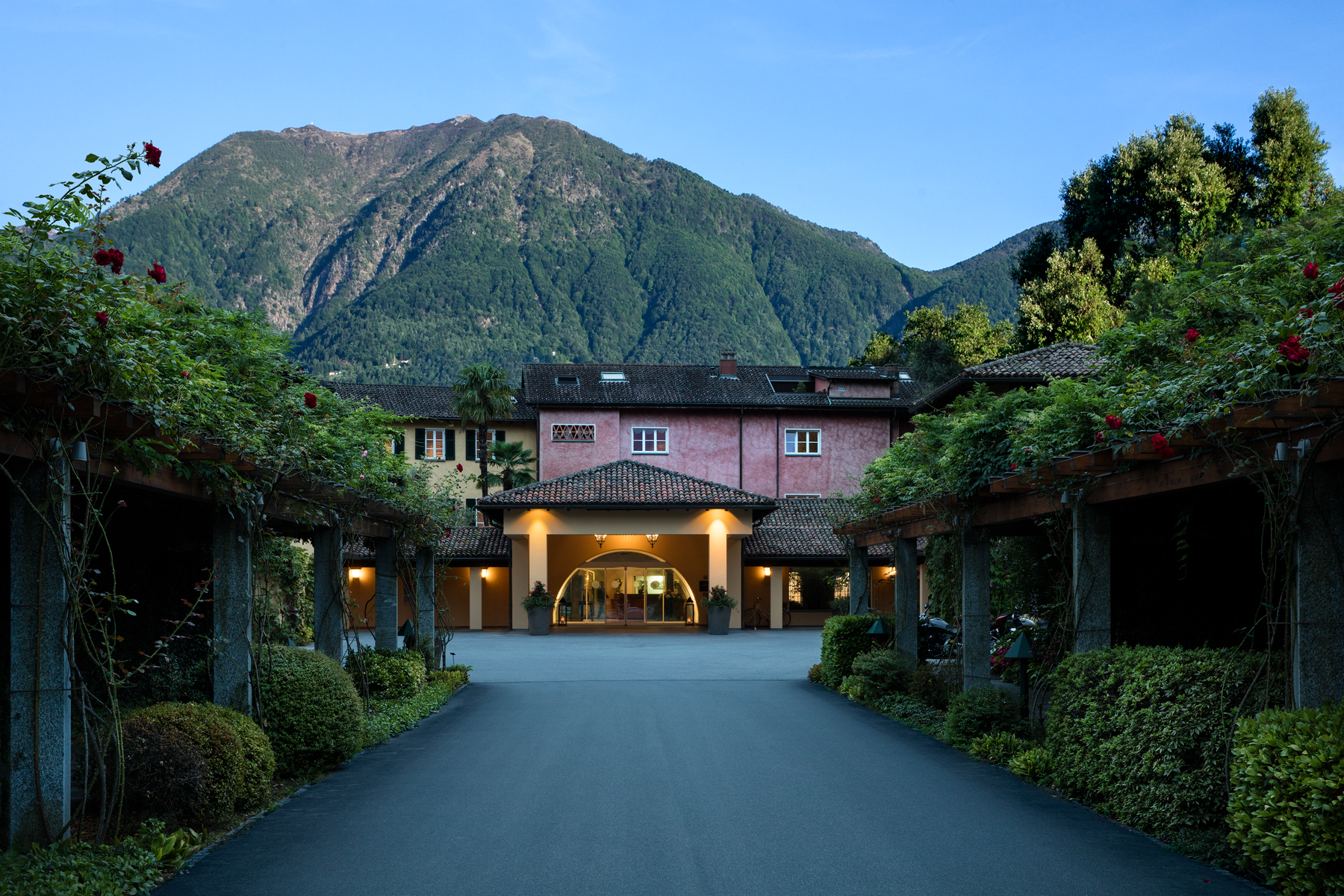
Jetsetter Style: Castello del Sole

The First Decision After a Collision Can Be the Most Important One
Two Weeks in Rome and Beyond: Turkish Airlines Itineraries from Boston, Chicago and Onward to India

Top 10 Hair Transplant Clinics in Turkey 2026
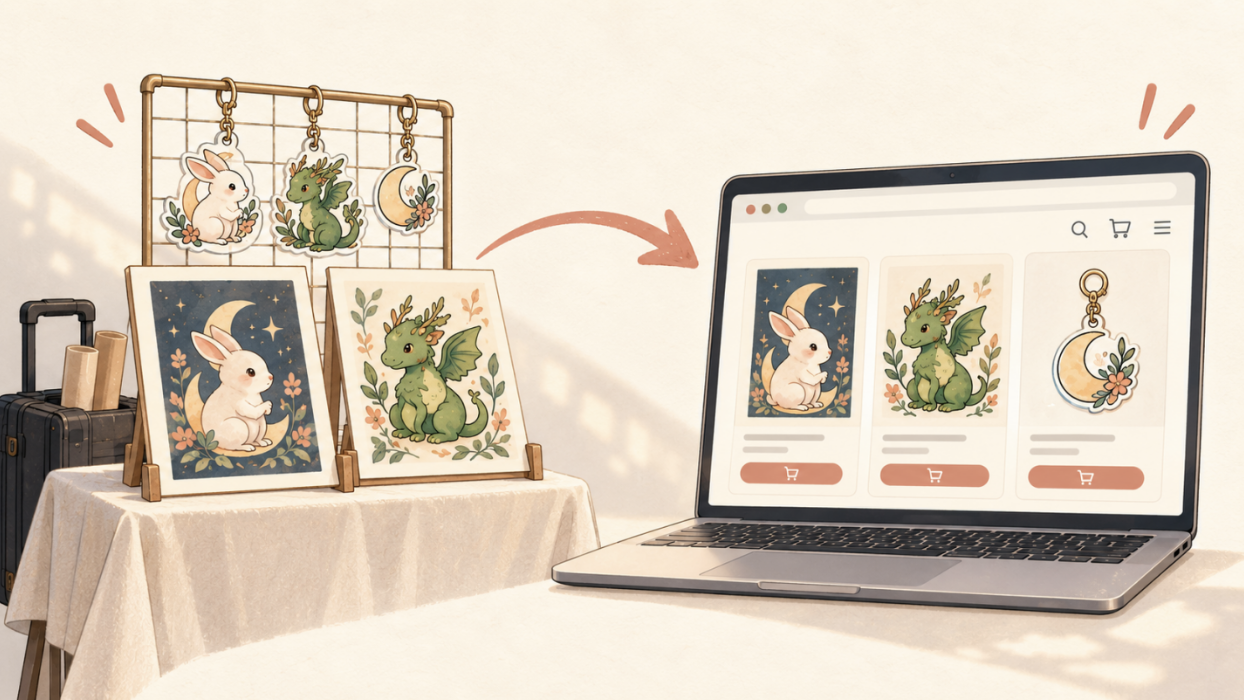
Artist Alley to Online Store: How Convention Artists Can Keep Selling After the Event
Categories
- Art
- Articles
- Business of Luxury
- Celebrities
- Culture
- Entertainment
- Events
- Faces of Summer 2026
- Fashion
- Fashion & Style
- Featured
- Finance
- Food, Spirits, Wine
- Hamptons
- Hamptons Celebrities
- Health
- Health & Beauty
- Lifestyle
- Luxury Lifestyle
- Press
- Profiles
- Real Estate
- Technology
- The Chronicles
- Travel
- Uncategorized
- Weddings