
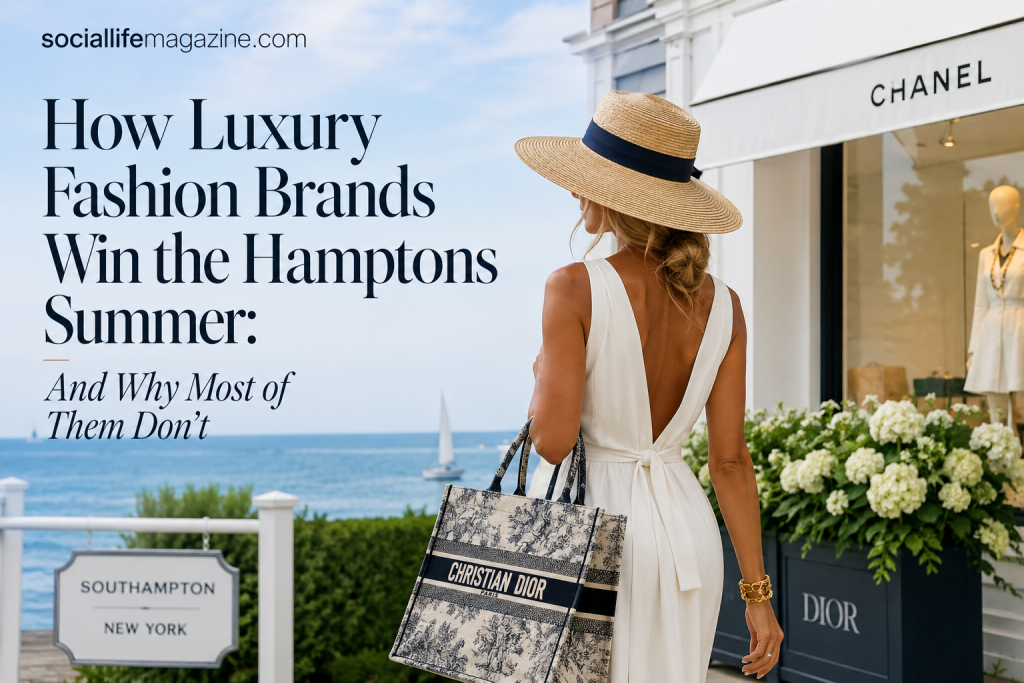
At Sagg Main Beach on a Saturday in July, every bag, every cover-up, and every pair of sandals is a sentence in a conversation. That conversation has nothing to do with clothing. The woman setting her towel down near the water is not dressed for the beach. She is dressed for the social field. Each item she is wearing is a declaration about where she sits in the taste hierarchy of the East End. And every other woman on that beach with the cultural literacy to read the signals is reading them. That is the operating logic of luxury fashion marketing in the Hamptons. This market does not respond to advertising. It responds to curation authority. And most luxury fashion brands in this geography do not understand the difference.
Philosopher and cultural critic Camille Paglia spent her career arguing that female status capital operates through aesthetic refinement, gatekeeping, and the power to define what is worth having. Her framework holds that the curation drive is not a vanity. It is a form of authority as real as any boardroom. In the Hamptons social field it is exercised daily, publicly, and with precision. The fashion brand that understands this positions itself as a worthy object of curation. The one that does not runs advertising into a market that does not buy on advertising logic.
For the foundational framework, see The Gender Capital of Luxury.
The Fashion Object as Status Declaration
Paglia’s argument about female curation capital begins with a claim that most fashion marketers have intuited but rarely made explicit. The object of desire in a luxury fashion purchase is not the product. It is the declaration the product enables. The Loro Piana tote is not a bag. It is a sentence: I belong in the taste class that carries this specific object in this specific market at this specific moment.
The sentence has a highly specific audience. It is not directed at people who do not know what Loro Piana is. It is directed at the women on that beach who do know, who understand exactly what the tote signals and exactly what it does not signal. The declaration is only legible to the curation class. That is the point. A status signal that everyone can read is not a status signal. It is advertising.
This is why the fashion brands that win consistently in the Hamptons are not the loudest ones. They are the ones with the most precise signals. Ralph Lauren owns a conquest-adjacent fashion position on the East End. The polo heritage, the Americana authority, the three-decade record of defining a version of Hamptons style: all of it speaks to a specific dominance register. Loro Piana owns a quieter curation position. The cashmere, the discretion, the price point that communicates to people who know without announcing itself to people who do not: that is curation capital working at full concentration.
Both positions are correct. Both require entirely different marketing voices. The brand that slides between these positions pays for it. Loud enough to read as aspirational mass market but priced for the curation class, it loses both audiences in the same season.
Scarcity as the Only Currency That Matters
Availability is a liability in the Hamptons fashion market. This is not a general luxury marketing principle. It is a specific feature of how curation capital operates in a concentrated social field. Every woman in the taste class knows what every other woman in the taste class is wearing. That knowledge is the entire mechanism.
A bag that is available at every boutique from Westhampton to Montauk is, by definition, not a curation signal. It is a product. The curation class does not carry products. They carry objects that require knowledge or access to obtain. The act of selection communicates the quality of the carrier’s taste. And her position in the network that surfaces the right things is what the object ultimately signals.
This is why trunk shows work in the Hamptons in a way that retail does not. The trunk show is not a selling event. It is a social calibration event. The brand that hosts a private trunk show at a Bridgehampton residence for forty invited guests is not selling inventory. It is creating a social fact: this object was available to these forty people before it was available to anyone else. That social fact is the product. The clothing is almost incidental.
It is also why the fashion brands that try to build Hamptons market presence through volume retail strategies consistently underperform. Opening a pop-up shop on Jobs Lane in Southampton is a valid retail decision. It is not a curation capital decision. The pop-up tells the taste class that this brand is available to anyone who walks by. That is the wrong signal in a market that runs entirely on selective access.
How Male Capital Intersects
Luxury fashion in the Hamptons is not a purely female capital market. It is primarily one, but the male capital dimension of fashion purchase decisions in this geography is larger than most brand marketers account for.
In Paglia’s framework, the male status drive expresses itself through conquest: the public demonstration of resources accumulated through risk and competition. In the Hamptons fashion context, this drive shows up most visibly in the purchase decisions that men make for their partners. The husband or partner who buys the Cartier bracelet, the Hermès scarf, the David Yurman piece, is making a conquest capital investment. He is communicating that his resource accumulation is at a level that enables this specific category of gift. The gift is his status signal. Her wearing it amplifies his signal through her curation authority.
This dynamic matters for fashion brand marketing because it means there is a male capital audience for luxury fashion products that responds to conquest language, not curation language. The jewelry brand that markets its Hamptons presence exclusively to female buyers is missing the acquisition event entirely. The gift-giving decision, for objects at the level where conquest capital is being expressed, is almost always made by the man. Curation decisions, which specific piece and from which brand, are almost always made by the woman.
The brand that positions itself as both a worthy conquest capital gift and a curation class object has a conversion architecture that a brand targeting only the curation buyer cannot match. The pitch has two entry points. Both lead to the same transaction.
The Hamptons Fashion Market
The East End fashion market does not function like a standard luxury retail market. It functions like a social proof network where editorial authority, personal relationships, and event presence matter more than store count, digital reach, or advertising spend.
The boutique layer is real but secondary. The shops in East Hampton Village and Southampton Village carry brands that have already earned their curation credentials through other means. A boutique placement confirms a brand’s position. It does not create it. The brand that tries to build Hamptons curation authority through retail distribution is working backwards.
The event layer is where curation authority is actually built and maintained. The Hamptons charity gala circuit, the polo season, the gallery opening calendar, the dinner party infrastructure of July and August: these are the arenas where taste gets set. Fashion brands earn or lose their positions in the curation hierarchy here, not in boutiques.
The editorial layer sits above both. Social Life Magazine has covered Hamptons style and fashion for twenty-three years. Its fashion editorial does not function as advertising. It functions as curation authority, the publication making a declaration about which brands belong in the taste world of the East End. A brand featured in these pages has received an endorsement from a cultural authority its target readership already trusts. That endorsement converts because it speaks to the curation drive directly. It tells the reader that this brand belongs in her world.
Why Runway Coverage Misses the Market
Most luxury fashion brands allocate their marketing budgets around the fashion calendar: runway coverage, Fashion Week, glossy national magazine placements, digital content timed to seasonal launches. This is the correct strategy for brand-building at the national level. It is the wrong strategy for converting the Hamptons curation class.
The woman who sets the aesthetic standard at a Bridgehampton dinner party in July is not primarily influenced by what she saw at New York Fashion Week in February. She is influenced by what she saw at the last dinner party she attended. She is watching what the women she respects are carrying at the polo match. Her primary source is the summer issues of publications that cover her specific social world with specific authority.
Runway coverage builds awareness. Social field presence builds the curation endorsement that this market actually converts on. These are different mechanisms and they require different investments. The fashion brand that puts its entire Hamptons budget into national glossy placements misses the social field entirely. It builds awareness among people who may never be in this market. Meanwhile, the taste-setters who are in it every summer go unaddressed.
The brands winning in the Hamptons fashion market invest asymmetrically in the local social field relative to their overall marketing spend. They sponsor events, host trunk shows, and build relationships with the women who set the aesthetic standard in this geography. And they invest in editorial placement in publications whose curation authority in this specific market is twenty-three years old.
The Social Life Magazine Fashion Play
Social Life Magazine reaches 25,000 print readers per issue across five summer editions distributed from Westhampton to Montauk. The 82,000 email subscribers receive the editorial before the summer season opens. These numbers represent the social field itself, not an aspirational audience trying to enter it.
For luxury fashion brands, editorial placement in Social Life Magazine does something that runway coverage, digital campaigns, and boutique distribution cannot accomplish. It positions the brand inside the curation conversation that the Hamptons taste class is already having. It tells the reader that this brand has been evaluated by a cultural authority she trusts and found worthy of the social world she inhabits.
That message is the conversion mechanism. Not the product photography. Not the brand story. The implicit endorsement of a publication with two decades of curation authority in the specific social field the reader is trying to navigate. The reader encounters the feature and her curation drive registers the signal: this belongs in my world.
The brands that have built durable Hamptons market positions over multiple seasons almost all have consistent editorial presence in publications like Social Life Magazine. The presence is not the only factor. But it is the most consistent distinguishing factor. The brands the taste class endorses almost always have this editorial presence. The ones that advertise without being adopted almost never do.
See also how curation capital operates for Hamptons medspas and aesthetic practices and how the full framework applies to hotels and resorts on the East End.
Where The Conversation Continues
Social Life Magazine reaches the Hamptons luxury fashion audience across five summer issues and 25,000 print copies per issue. Year-round digital distribution and 82,000 email subscribers extend that reach into the Upper East Side fashion buyer before Memorial Day.
Editorial features, advertising partnerships, and sponsored content are available for the 2026 season. The season opens July 18. Space is limited.
Author

Written by
Recent Posts

Why the Supplement Market Is Shifting From More Products to Smarter Choices
5 Ways Engraved Custom Trophies Boost Employee Engagement
Creating Beautiful Mix-and-Match Tablescapes for Any Occasion
Is It Cheaper to Drive or Ship Your Car? We Ran the Numbers
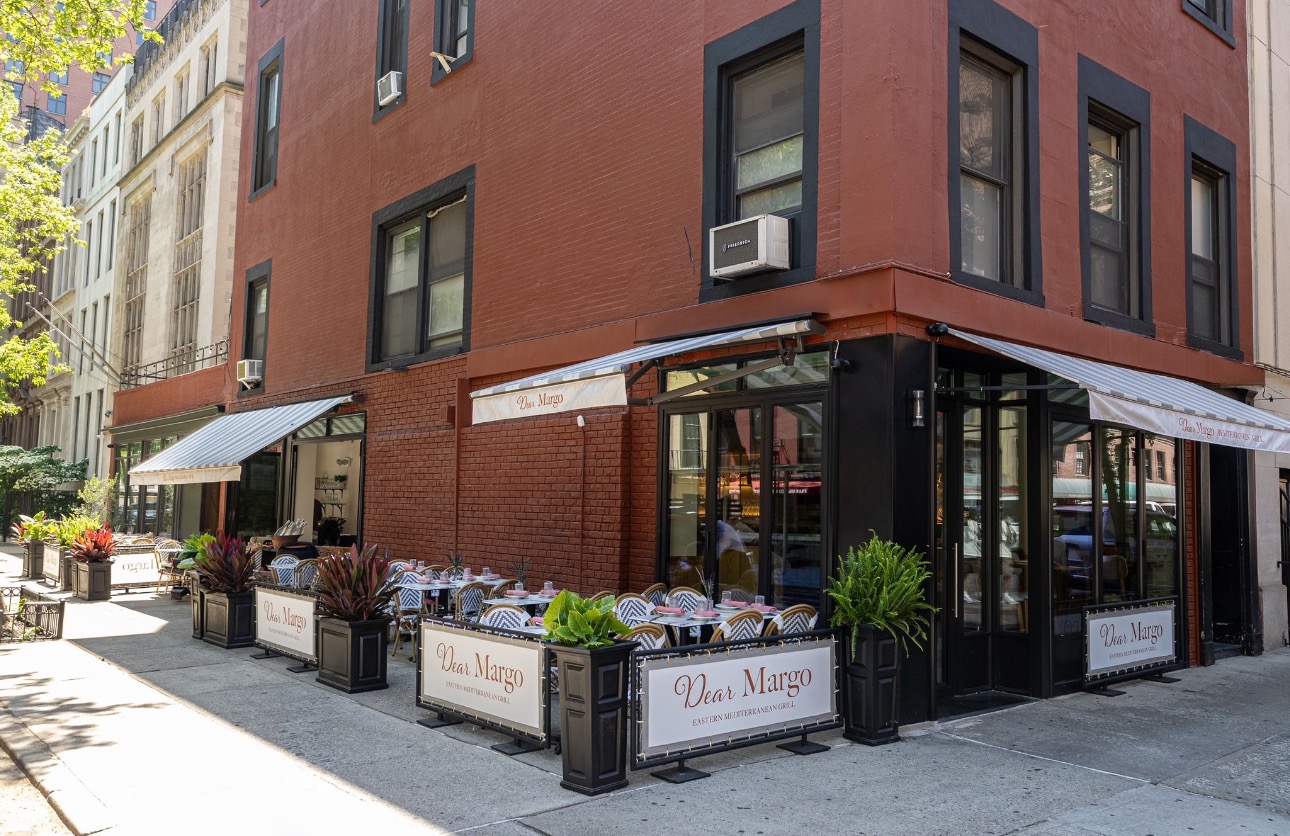
Dear Margo: Restaurateur Dean Pashilis’ Tribute to Family, Food and Hospitality
Categories
- Art
- Articles
- Business of Luxury
- Celebrities
- Culture
- Entertainment
- Events
- Faces of Summer 2026
- Fashion
- Fashion & Style
- Featured
- Finance
- Food, Spirits, Wine
- Hamptons
- Hamptons Celebrities
- Health
- Health & Beauty
- Lifestyle
- Luxury Lifestyle
- Press
- Profiles
- Real Estate
- Technology
- The Chronicles
- Travel
- Uncategorized
- Weddings